close
St-Germain
L'HistoireDialoguesRecipesL'Équipe

The Harvest and Maceration Process

HOW IS IT, one might ask, that in the countless decades during which fine European spirits have been crafted, never before has a liqueur such as St-Germain debuted?

The answer, like St-Germain itself, is artfully complex.

First, let us consider the dainty elderflower blossoms themselves. While by no means rare, these fragile flowers are, in contrast, maddeningly ephemeral once picked. In a matter of days they begin to lose their delicate fragrance and flavor.

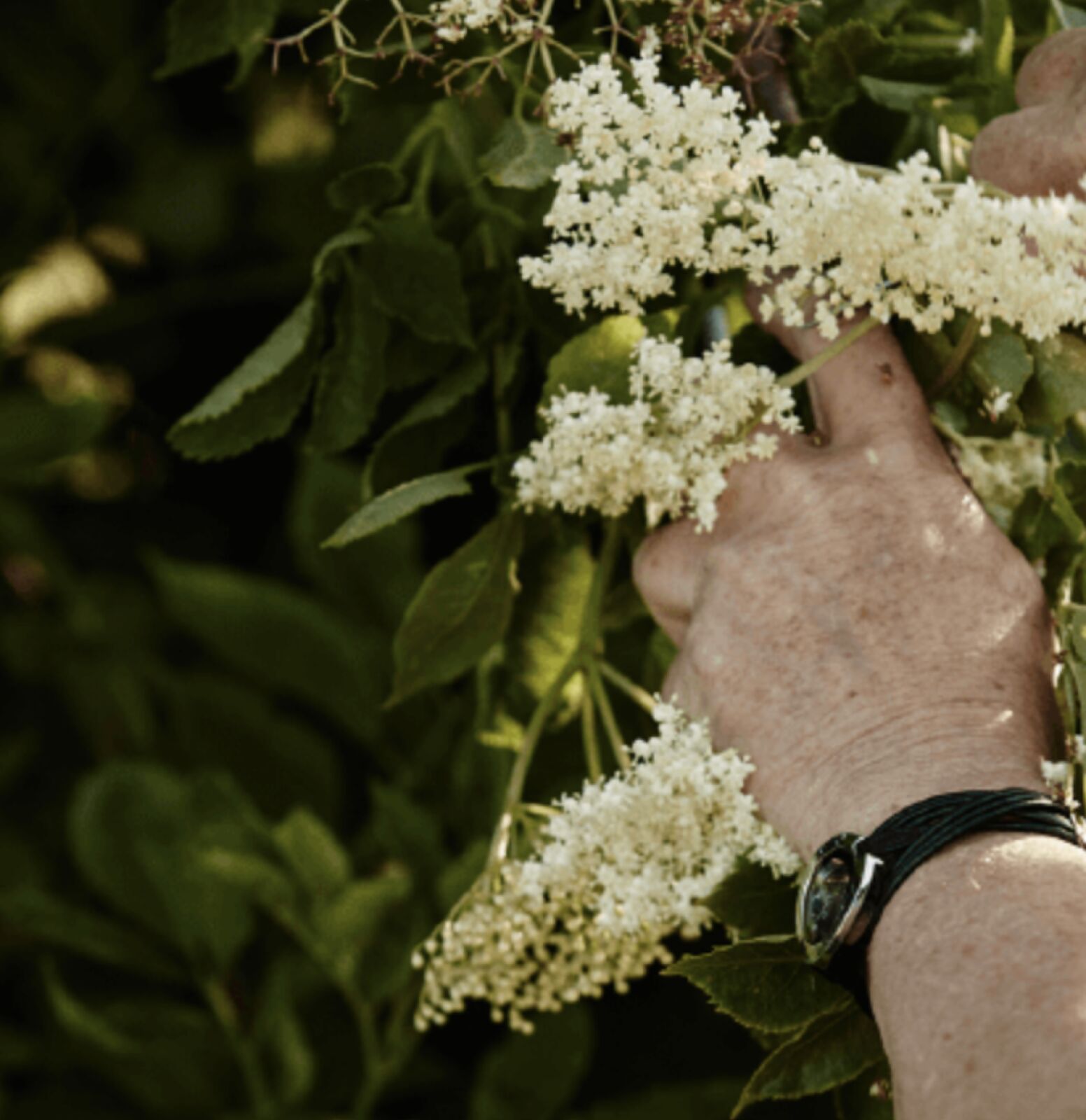
It is for only a few fleeting weeks in late spring, when we are able to gather the delicate blossoms to make our liqueur. In order to acquire enough of the hand-picked elderflowers, we must employ a careful harvest choreography during the short 4–6 week blossoming period. As the flowers are selected they are delivered to several small collection stations, where harvesters are paid by the kilo for their flowers. Some of the harvesters even transport the flowers using specially rigged bicycles. This gives them the freedom to collect the flowers independently, therefore increasing their yield.

SO NOTWITHSTANDING THESE FINE FARMERS who aid us in the harvest and their two-wheeled delivery system, speed is of the essence. Our use of exclusively fresh elderflowers and our careful and rapid maceration of these flowers give us a distinctly different, fresher, and more complex flavor as compared to any other elderflower product, most of which are extracted from freeze-dried or frozen flowers.

This sort of concoction tends to be cloyingly sweet and frustratingly inconsistent – traits a bartender must occasionally endure amongst his clientele, but never, we hope, amongst his ingredients.

As we were saying, speed is crucial to preserving the freshness and flavor of these fragile blossoms. To that end, they are immediately macerated to capture the freshest flavor. This daily maceration is successively added together every day during the 4–6 week harvest period, making up our annual production of St-Germain. Here again is another reason nothing like St-Germain has ever been created before. Traditional maceration processes yield little flavor from these tiny blossoms. Unfortunately, the other customary option, pressing the flowers, causes a regrettable bitterness.

TO CREATE ST-GERMAIN, it was necessary, then, to invent and perfect an entirely new method of persuading the elderflower to give up its prized essence while retaining one-of-a-kind flavor. Needless to say, this new process is our proud family secret.

Returning to our old world techniques, the next step is to marry the resulting spirit with just enough sugar to enhance the natural flavor of the blossoms. The result, after painstaking refinements to every subtlety of the recipe, is a clean floral nose with hints of pear, peach and grapefruit zest. Most importantly, one will note the wonderfully fresh flavor of the elderflowers, available for the first time in a finely balanced artisanal liqueur.